The Rise of Agentic Engineering
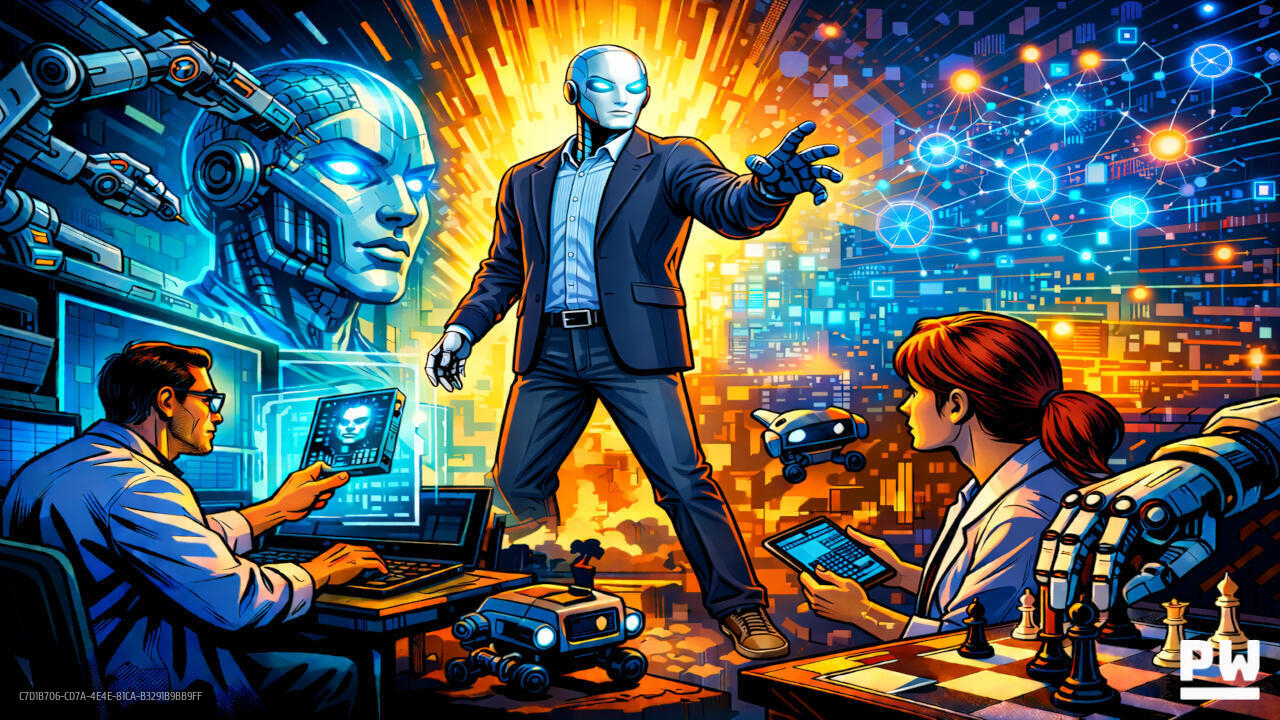
Agentic engineering is emerging as a significant shift in how AI is integrated into software development. It represents a move toward systems that can pursue goals, make decisions, and execute tasks with a degree of autonomy that extends beyond traditional automation. This shift is occurring alongside the rise of vibe coding, a style of AI-assisted development that emphasizes intuition, exploration, and rapid iteration.
The growing interest in autonomous AI systems has created new expectations for how software is built and maintained. Development workflows are changing as teams explore how to incorporate agents that can plan, reason, and act within complex environments. Understanding the relationship between vibe coding and agentic engineering provides useful context for organizations preparing for this transition.
The Origin of Vibe Coding
Vibe coding refers to an intuitive, pattern-driven approach to programming that relies heavily on AI assistance. Developers guide models through natural language prompts, iterative refinement, and exploratory workflows. The emphasis is on momentum and creativity rather than strict procedural control.
Early experimentation with AI-assisted coding laid the foundation for this practice. Developers began using large language models as collaborators, generating scaffolding, testing ideas, and shaping prototypes through conversational interactions.
Andrej Karpathy was the first to use the phrase vibe coding. He expanded on this philosophy by emphasizing machine-assisted intuition and the potential for AI systems to enhance developer efficiency. His commentary helped frame vibe coding as a legitimate method for accelerating the creative process while reducing friction in early development stages.
Examples of vibe coding appeared in small personal projects, experimental tools, and rapid prototypes. Developers used AI to generate entire modules, explore unfamiliar frameworks, or build functional prototypes in a fraction of the time previously required. These early projects demonstrated how conversational coding could accelerate experimentation.
The Rise of Vibe Coding
Vibe coding has moved from niche communities into broader awareness as AI-assisted tools became more capable. The timeline of adoption followed the release of increasingly powerful language models and the integration of AI features into mainstream development environments.
Several technological factors supported this rise. Large language models provided the reasoning and pattern recognition required for fluid collaboration. AI-assisted IDEs introduced features such as code suggestions, inline explanations, and automated refactoring. Code generation tools enabled developers to produce working components with minimal manual input.
The cultural impact was significant. Teams began to adopt workflows that encouraged experimentation and rapid prototyping. Collaboration patterns shifted as developers used AI to explore ideas before formalizing them. Innovation cycles shortened as individuals could produce functional concepts quickly.
Early metrics and case studies highlighted productivity improvements. Teams reported faster iteration cycles, reduced time spent on boilerplate code, and increased capacity for creative exploration. These outcomes helped establish vibe coding as a legitimate practice rather than a novelty.
The Perception of Vibe Coding
Reactions to vibe coding varied across the software community. Many developers embraced it as a way to accelerate their work and explore ideas more freely. Researchers viewed it as an interesting evolution in human-computer interaction. Organizations saw potential benefits but also raised concerns.
Common criticisms focused on reliability, reproducibility, and maintainability. Some argued that vibe-coded systems could become inconsistent or difficult to manage at scale. Others questioned whether intuition-driven workflows could support long-term sustainability.
Enthusiasts emphasized the empowerment that vibe coding provided. They valued the creative freedom, the ability to prototype quickly, and the reduced cognitive load during early development stages.
Debates continue within the AI and software engineering community. Some view vibe coding as a transitional phase, while others see it as a permanent addition to the developer toolkit. The discussion has helped shape the emergence of more structured approaches such as agentic engineering.
The Origin of Agentic Engineering
Agentic engineering is a discipline focused on designing autonomous AI agents that can pursue goals, make decisions, and execute tasks within defined constraints. These agents operate with a level of independence that distinguishes them from traditional automation or AI-assisted coding.
The roots of agentic engineering can be traced to research in artificial intelligence, robotics, and multi-agent systems. Early work on planning, reasoning, and distributed coordination provided the conceptual foundation for modern agentic systems.
Key milestones include advances in reinforcement learning, hierarchical planning, and tool-using agents. These developments enabled AI systems to operate with greater autonomy and to interact with complex environments.
Agentic engineering differs from earlier approaches by emphasizing structured design, governance, and accountability. It focuses on building systems that can operate reliably, scale effectively, and integrate into organizational workflows.
How Agentic Engineering Differs from Vibe Coding
The differences between vibe coding and agentic engineering can be summarized through several dimensions.
| Dimension | Vibe Coding | Agentic Engineering |
|---|---|---|
| Orientation | Intuition-driven exploration | Goal-driven autonomous behavior |
| Human Role | Human-guided prompting and iteration | Human-defined objectives and oversight |
| Output | Code generation and rapid prototyping | Autonomous agents performing tasks |
| Scalability | Effective for small to medium projects | Designed for large-scale, reproducible systems |
| Reproducibility | Dependent on human prompting patterns | Structured workflows with defined behaviors |
Practical examples illustrate these differences. A developer using vibe coding might generate a prototype API through conversational prompts. An agentic engineering system could operate that API, monitor its performance, and adjust configurations autonomously.
The two approaches are complementary. Vibe coding can support early exploration and prototyping, while agentic engineering provides the structure required for production systems. Ideas developed through vibe coding can feed into agentic pipelines, enabling a smooth transition from experimentation to deployment.
The Future of Agentic Engineering
Agentic engineering is likely to see significant adoption over the next decade. Organizations are exploring how autonomous agents can support enterprise systems, research workflows, creative applications, and DevOps automation. Potential applications include agents that manage infrastructure, conduct experiments, generate insights, or coordinate complex processes. These systems could operate continuously, adapt to changing conditions, and support human teams by handling routine or complex tasks. Over the next fewyears, agentic engineering is predicted to move from simple task completion to managing entire business processes. Potential applications include:
- Enterprise Systems: Autonomous invoice processing and real-time financial inquiry resolution.
- DevOps and IT: Continuous monitoring, anomaly detection, and automated patching of security vulnerabilities.
- Supply Chain: Agents that predict demand shifts and automatically trigger inventory reorders.
Challenges remain. Safety, alignment, and oversight are essential considerations. Organizations must ensure that agents operate within defined boundaries and that their actions remain transparent and auditable. Agentic engineering has the potential to reshape how software is developed and maintained. As autonomous systems become more capable, the relationship between humans and AI may shift toward a model where developers focus on intent, governance, and system design while agents handle execution. Ethical considerations regarding the black box nature of autonomous decisions and the potential for single points of failure remain central to the discussion. Ultimately, agentic engineering may redefine the relationship between humans and AI, moving the human role from coder to orchestrator.
What Really Matters
The rise of agentic engineering is not merely about faster code or more capable artificial intelligence; it is about the choice of how to work alongside autonomous systems. From the intuitive experimentation of vibe coding to the structured precision of agentic agents, the essential factor is the balance between human creativity and machine autonomy. The goal is to design systems that empower humans to focus on intent, oversight, and ethical decision-making, while allowing artificial intelligence to manage repetitive or complex execution. The question is not how smart the artificial intelligence becomes; it is how wisely we guide its agency and how thoughtfully we shape the future of human-machine collaboration.


